The exhibition will run at the gallery from the 13th September until the 8th February 2026.

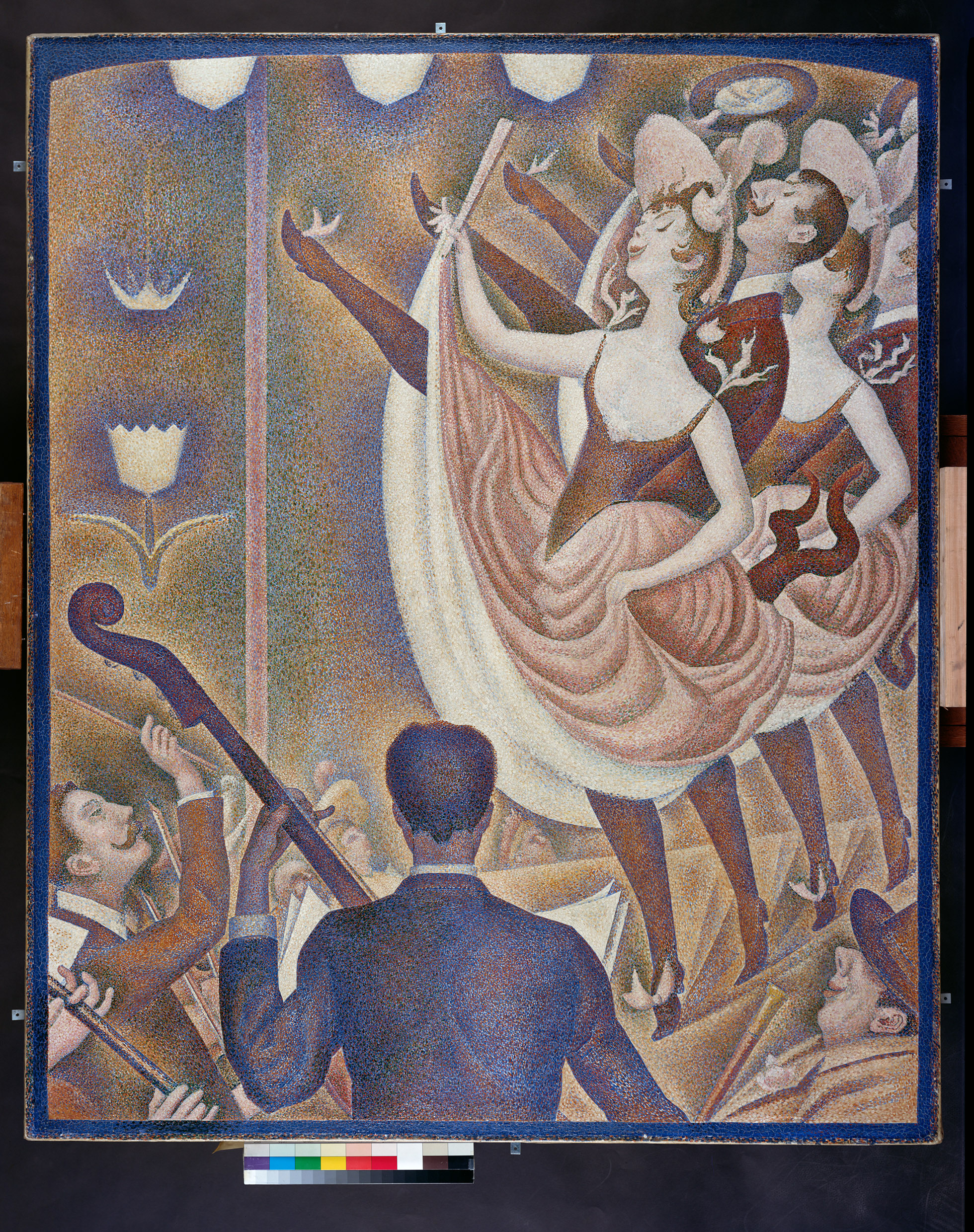
Georges Seurat Le Chahut, 1889-90
Oil on canvas © Collection Kröller-Müller Museum, Otterlo, the Netherlands
The National Gallery will be presenting many of the paintings collected by Helene Kröller-Müller, one of the first great women art patrons of the 20th century.
Among the works on display in this exhibition will be Georges Seurat’s painting of cancan dancers ‘Le Chahut’ (1889‒90) and is the first -ever devoted to the Neo-Impressionist art movement at the National Gallery.
The exhibition will also show radical works of French, Belgian and Dutch artists, painted from 1886 to the early 20th century. These include Anna Boch (1848‒1936), Jan Toorop (1858-1928), Théo van Rysselberghe (1862‒1926) and Paul Signac (1863‒1935).
Considered to be one of the first great women art patrons of the 20th century, Kröller-Müller, assembled what is probably the world’s greatest and most comprehensive collection of Neo-Impressionist paintings just two decades after these works were painted.
As well as being one of the first European women to put together a major art collection, Kröller-Müller was a pioneer in displaying modern works of art on white walls; in a museum designed by Belgian architect Henry van de Velde, who began his career as a Neo-Impressionist painter.
Other highlights of the exhibition will include: important pictures from the same collection by other significant Neo-Impressionists such as Théo van Rysselberghe’s ‘In July – before Noon’ or ‘The Orchard’ (1890), Jan Toorop’s ‘Sea’ (1899), Henry van de Velde’s ‘Twilight’ (about 1889) and Paul Signac’s ‘The Dining Room’ (1886-87), which will be paired with the artist’s other interior scene, ‘A Sunday’ (oil on canvas, 1888-90), an exceptional loan from a private collection.
The aim of the exhibition is to how this style that emerged from 1886 when Georges Seurat exhibited his work ‘A Sunday on La Grande Jatte’ at what was to prove the final Impressionist exhibition heralded the end of Impressionism and, became one of the very first pan-European art movements.
The radical nature of these works will be explored both in the way that they were painted, and in political underpinnings of the Neo-Impressionist movement with artists reacting against the industrial age with a desire to reshape society by painting the struggles faced by the working class.
It is the first exhibition to return to the temporary exhibition galleries in the National Gallery’s Sainsbury Wing, As well as the works collected by Helene Kröller-Müller, the display will include works from public and private collections worldwide including the Rijksmuseum, Amsterdam, Museum Barberini, Potsdam, and Tate, as well as pictures from the Gallery’s own Neo-Impressionist collection.
This exhibition is a collaboration between the National Gallery and the Kröller-Müller Museum, Otterlo.
To book tickets visit: https://www.nationalgallery.org.uk/exhibitions/neo-impressionism