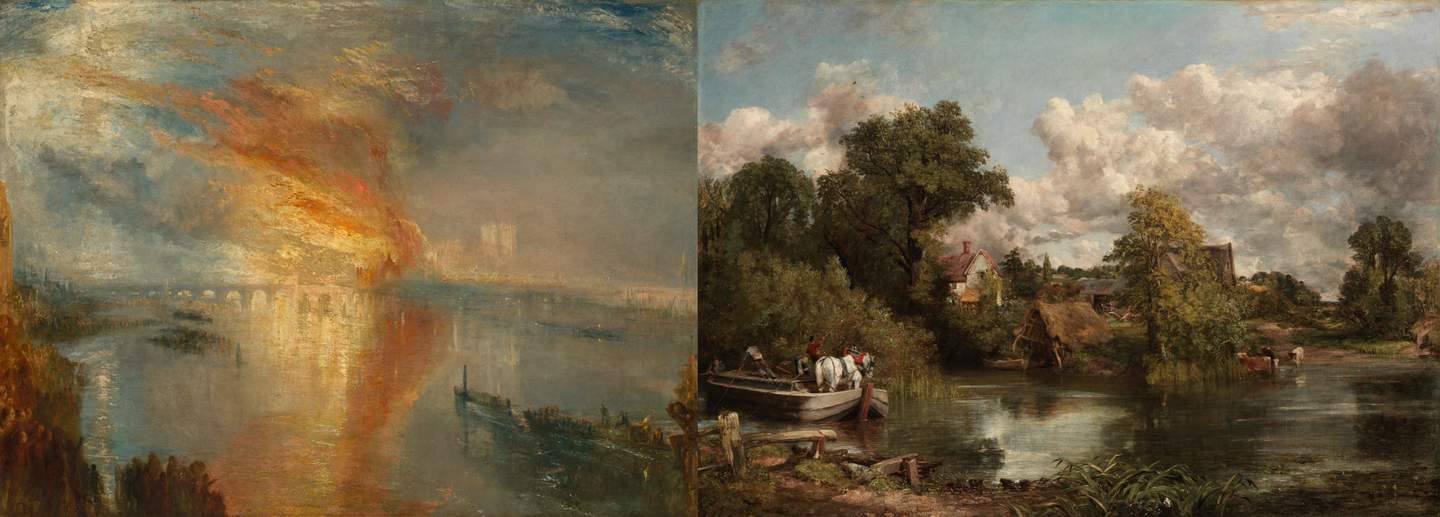
The exhibition will run at the gallery from the 27th November until the 12th April 2026.

This Autumn, Tate Britain will display a new exhibition to explore the intertwined lives and legacies of Britain’s most revered landscape artists: JMW Turner (1775–1851) and John Constable (1776–1837).
As different painters and personalities, both challenged artistic conventions of the time, developing ways of picturing the world which still resonate today. This exhibition will trace the development of their careers in parallel, revealing the ways they were celebrated, criticised and pitted against each other, and how this pushed them to new and original artistic visions.
Featuring over 170 paintings and works on paper, highlights include Turner’s 1835 The Burning of the Houses of Lords and Commons, lent by Cleveland Museum of Art and not seen in Britain for over a century and The White Horse 1819, one of Constable’s greatest artistic achievements, last exhibited in London two decades ago.
Constable built his career on the Suffolk landscapes of his childhood, opting to sketch in oils outside amid the vast views of Dedham Vale and the river Stour, which often recurred in his work. Tate Britain will include his painting box and sketching chair, with visitors able to chart the development of Constable’s skilful draughtsmanship and radical handling of paint to add ‘sparkle’.Meanwhile, a group Constable’s cloud studies will be brought together for the exhibition. Reflective of his belief that the sky was key to the emotional impact of a painting they are now one of the most celebrated aspects of his output and underpinned the powerful skyscapes in the artist’s monumental six-foot canvases. Late works such as Hampstead Heath with a Rainbow 1836 will be featured.
In contrast, Turner travelled widely across Britain and Europe filling sketchbooks with quick pencil studies. This offered creative inspiration, influencing sublime Alpine scenes such as The Passage of Mount St Gothard from the Centre of Teufels Broch (Devil’s Bridge) 1804, as well as commercial opportunities to have prints made after his watercolours. The exhibition will explore how Turner developed original ways to apply paint and depict light. Some of Turner’s most celebrated late works will feature, including Ancient Italy – Ovid Banished from Rome, first exhibited in 1838 and not shown in London in over 50 years.
Placed head-to-head, visitiors can see how these artists changed the face of landscape painting with their two competing visions, ending with a new film featuring contemporary artists Frank Bowling, Bridget Riley, George Shaw and Emma Stibbon reflecting on the enduring legacy of Turner and Constable.
To find out more visit: https://www.tate.org.uk/whats-on/tate-britain/turner-and-constable?