We chatted to producer and performer Layla about taking Tom Murray’s American Candy out on tour.
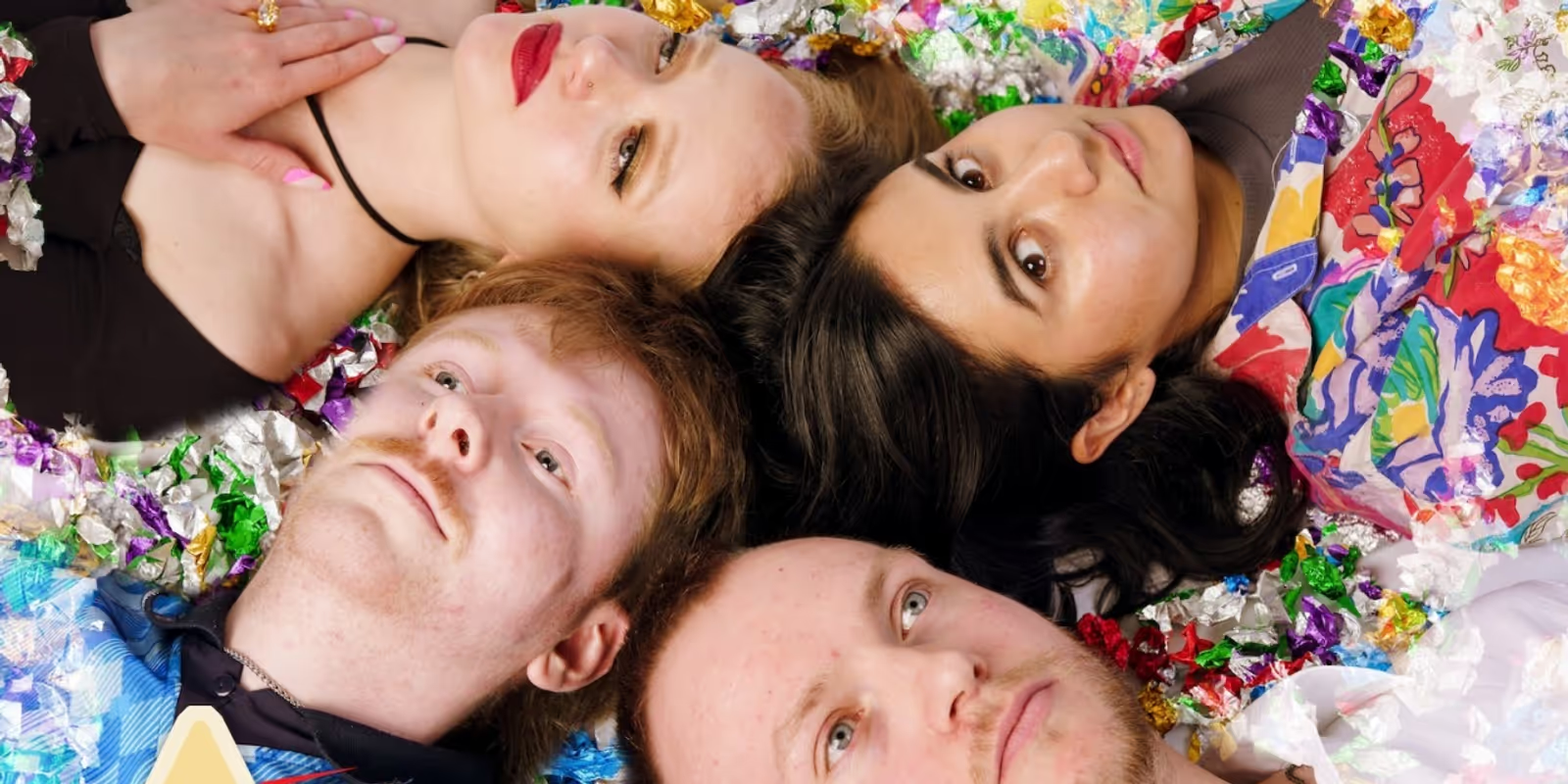
Hi Layla, what can you tell us about American Candy? American Candy is a hilarious crime comedy about a mysterious American Candy shop that is taking up prime real estate in a small British town. The rent in these locations cost an arm and a leg, a chocolate bar is £10, but no one seems to go in there and buy anything. How are they surviving!!?
It explores the people working in this store, and their desperate attempt to try and work out if it’s a front for something darker. American Candy uses the shop as a setting to talk about issues facing Britain today. The growth of dissatisfaction in our country, rise of the Manosphere and toxic masculinity, how many peoples dissatisfaction is being misplaced on minorities and the ‘other’.
What made you want to get involved with this production? I have been a fan of Tom Murray’s writing for a while, and we have worked together on a couple of his previous projects. He has a really unique talent, blending naturalism and absurdism, comedy and drama, in a way that never feels unfocused or confused but essential to the story he is telling.
When he pitched me American Candy I knew I wanted to be involved. He wanted to talk about something that people are too afraid to. How so many people are seeking meaning in their lives but ultimately unable to find it through lack of meaningful work. So many people are working endless hours in jobs that don’t provide them any security or satisfaction and it really takes its toll.
American Candy explores how the lack of meaning in a capitalist society creates anger. And when people are angry due to forces beyond their control they seek a scapegoat. In our country that is more and more being directed at minorities.
It is such a well crafted play, using humour to explore these themes. Showing why so many young people are turning to figures like Andrew Tate for guidance. It reveals how we’re all vulnerable to this indoctrination, criticising these bigoted positions whilst looking carefully at how they came about.
Whilst it has many dark and shocking twists and turns, it ends ultimately on an optimistic statement. A rallying cry for a different type of society. One not founded on greed, suspicion and misanthropy – but trust, generosity and communality. It’s not too late.
How does it feel to be taking Tom Murray’s play out on tour? I’m so excited!
It is a play about Britain – the battle for its soul. And as a play that talks about social division and inequality in the country, we knew instantly we had to take it out of London and to as many communities as possible. The way whole swaths of our nation are priced out or geographically excluded from some of the great work being made in our capital is part of the problem – and something we feel would be hypocritical of us not to redress.
Touring is also just such a rewarding experience. Each regional audience responds differently from the last – they relate to different characters or moments or jokes – it breathes fresh life into the play! And fresh life into us!
How has it been working on the show so far? The show has been great fun. We’ve brought together a really exciting team with different cultural influences which is taking the show in such an exciting direction. Our director, Francesca Hsieh, is really brilliant. She infuses the script and rehearsal room with so much joy and energy: it’s infectious! Everyone is so talented and enthusiastic about the piece and all really open to working collaboratively which is what we’re all about.
What did you take away from American Candy when you first read it? How funny it was! It’s rare that I find myself laughing out loud at a script. But once that had died down I was definitely left with a feeling of validation. Concerns and feelings I had about society, the underfunding of meaningful jobs and practices – like the arts – and the general despondency we’re all feeling in our generation wasn’t our fault. Or wasn’t any individual’s faults. But a fault of a system greater than us, and a system we can be empowered to change.
By Emma Clarendon
To find out more visit: https://www.mangoensemble.com/american-candy