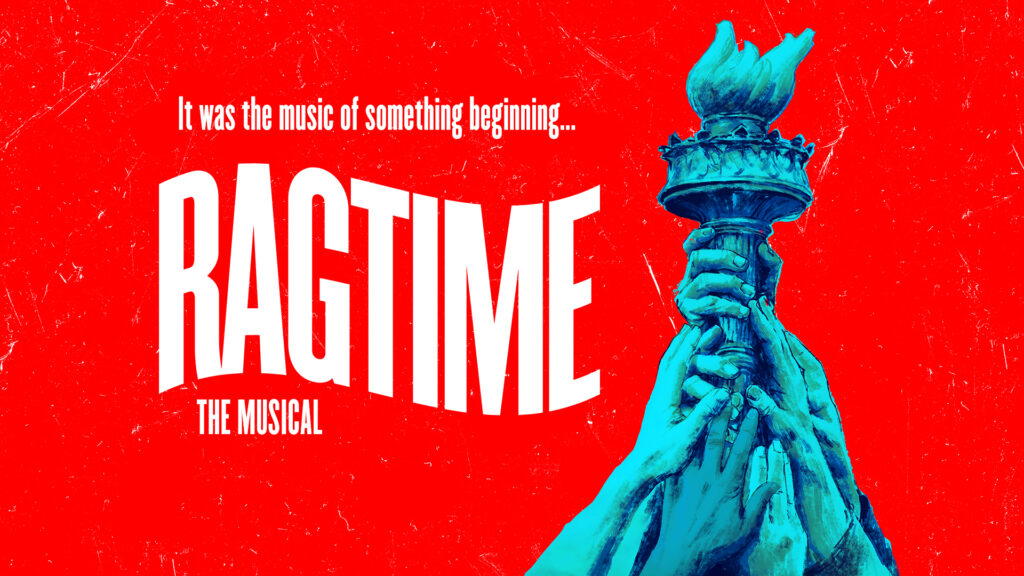
We take a look at what is being said about the New York revival of the musical.

Variety: “In productions large or small — or, here, imperfectly in-between, though still glorious — everything is the service of the show that creates with words, music and movement a grand American tapestry — tears and all.”
The New York Times: “As the plot follows the intersecting fortunes of those three characters’ families, each seeking to redeem the country’s promise at a time of tumultuous change, old-fashioned musical-theater pleasures are very much on offer: a multitudinous cast clad in sumptuous costumes; riveting vocals undergirded by a 28-piece orchestra; a sprinkling of spectacle descending from above and rising from below. It works as rousing entertainment, full stop.”
Deadline.com: “DeBessonet takes the challenge and wins, rescuing a near-classic from the excesses of the 1990s to prove, once and for all, that Ragtime, imperfect as it may be, deserves a place among the most significant musical theater achievements of that decade.”
Vulture.com: “The fantasy of endless space is what matters, a great chimeric promise, this production understands, that both sustains the nation and goes unfulfilled. Even America has an end. Ragtime, with its thudding sentimentality, is not a truly great musical, but deBessonet has enough finesse to convince you that it might come close.”
New York Theater.me: “The revival of “Ragtime” has taken on more of the epic feel to which it aspires, thanks to its move from an Encores series concert to a full Broadway production on the Vivian Beaumont’s grander stage, turning an already superb production into a sumptuous spectacle.”
The Wall Street Journal: “A sterling cast makes the most of a marvelous score in Lincoln Center Theater’s admirably trenchant revival of this complex musical, set at the turn of the 20th century.”
New York Post: “Now, in 2025, you feel every bit as fortunate to be basking in the radiant glow of Caissie Levy playing Mother, Ben Levi Ross as Mother’s Younger Brother and especially the golden-voiced Joshua Henry as Harlem piano player Coalhouse Walker. The revival’s power is all in the pipes.”
Entertainment Weekly: “Under the direction of Lear DeBessonet (Once Upon a Mattress), this Ragtime revival offers a bold, beautiful production, in its best moments bolstered by Adam Honoré’s clever lighting and some effectively deployed projections. But the staging also has a tendency to lean on its gimmicks (the turntable stage, the moving staircases) like crutches, wasting opportunities for sprawling choreography and grounded movement.”
New York Theatre Guide: “Yes, the show soars during several thrilling power ballads and group numbers like the title song, “New Music,” “Wheels of a Dream,” and “Back to Before.” But by the 3-hour mark, the steady procession of emphatic and declamatory numbers becomes a sort of sonic wallpaper that loses impact. As an audience member, I always fall prey to Ragtime’s power-anthem overload; it has happened during all three Broadway runs.”
Time Out: **** “deBessonet’s production has a dignity and seriousness of purpose that carry the day, and Henry is irresistible: When he sings “Come down to me” to a reluctant Sarah, who is hiding from him upstairs, it emerges as a wave of baritone bliss; at the performance I attended, the audience burst into applause at this line, and two of his later songs earned midshow standing ovations—and I do mean earned. Henry has been at the forefront of Broadway leading men for 15 years, but this show is his triumph. He takes one of the most demanding roles in the Broadway canon and he does it full justice.”
amNY: “Twenty-five years after its original run, the musical roars back not with spectacle but with purpose, and in doing so, it may finally have found the moment it was meant for. This revival, now at Lincoln Center’s Vivian Beaumont Theater and expanded from last year’s high-powered City Center concert staging, arrives not as nostalgia but as a galvanizing statement, both thrilling and newly vital.”
Theatre Mania: “With so many voices and ideas, echoing the discord of the country it means to portray, Ragtime really shouldn’t work. And yet unlike any other musical, Ragtime leaves me with the feeling of having run an emotional marathon alongside characters I have come to love, a sensation I usually only ever get after reading a particularly good novel. It’s a remarkable achievement that is not to be missed.”
New York Stage Review: “Music has a unique way of bringing people of all stripes together. And that’s why shows like this have the power to enlighten, inspire and remind us what we look like at our best and worst. Ragtime the musical not only sings beautifully, it speaks with a relevance and resonance that connects us all. And that’s what makes a masterpiece. “
Exeunt NYC: “It’s amazing, though, to hear this score so thunderously performed by the talented company, James Moore’s excellent orchestra, and Kai Harada’s crystal clear sound design. It’s also amazing – and chilling – how relevant some of the show’s themes still are. Look at the pain on Allison Blackwell’s face when she rips into “Till We Reach That Day” at the end of the first act. She’s not just singing about Sarah’s death.”
The Wrap: ” The story is not so much dramatized as it is told to us in a series of Wikipedia lectures. And the historic figures of Harry Houdini (Rodd Cyrus), Evelyn Nesbit (Anna Grace Barlow), Booker T. Washington (John Clay III) and Emma Goldman (Shaina Taub, recycling her “Suffs” performance minus the humor) appear to have wandered in from another far more intriguing show.”
To find out more visit: https://www.lct.org/shows/ragtime/