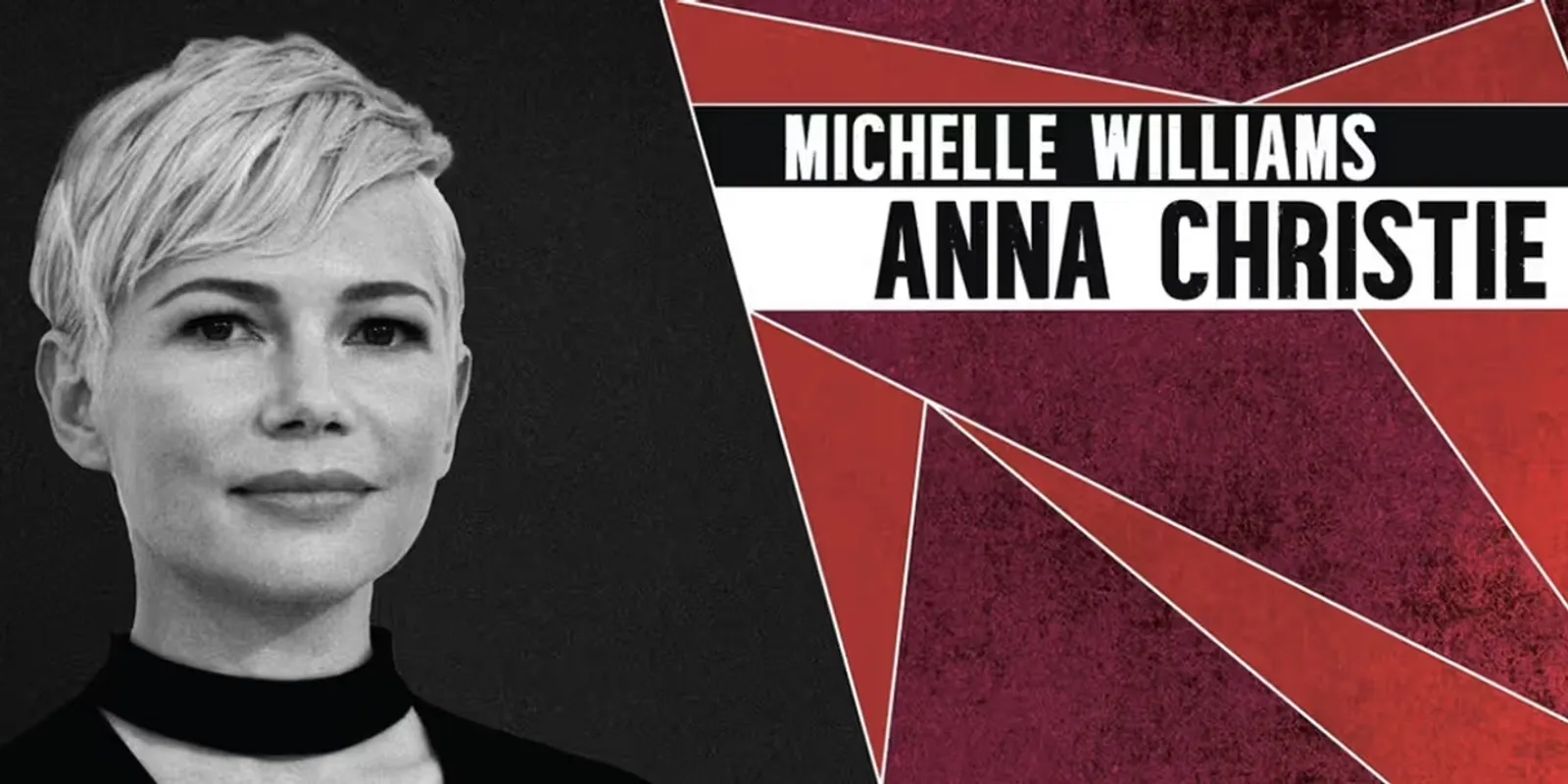
Discover how critics have been reacting to Tomas Kail’s production starring Michelle Williams and Tom Sturridge.

The Guardian: “There’s a miserablism to Anna Christie that might partly be inherent to the play, bleak as O’Neill’s view of these working-class folks is. Kail, though, adds some squalor of his own, a terribly abiding sense that these downtrodden characters are mere experiments for the actors, that all of this was done as a test of capability rather than being driven by a thoughtful and complex motivation to reinterpret a tricky text. All the very talented people involved would probably get a decent grade for this scene study in theater school, but it’s not a vessel fit for paying customers.”
Exeuntnyc.com: “It all comes together well, but doesn’t quite turn into something great. It’s a perfectly respectable production, but I’m not convinced the play has much to offer, despite its Pulitzer-winning bonafides. The central trio (and a marvelous one-scene performance from Mare Winnigham) make it worth seeing, but it’s not really the kind of play to generate excitement beyond that. Still, this is clearly a passion project for Kail and Williams and the results of their work are quite impressive.”
New York Theatre Guide: “Williams’s performance captures the character’s search for identity, but it often feels all over the place: Anna shifts abruptly from bawdy and bold to meek and reserved, hopping between Minnesotan, Swedish, and transatlantic accents, leaving the portrayal richly textured but disjointed.”
Observer.com: “Although twice Anna’s age, Williams vibrates with bruised innocence and grit beneath a porcelain veneer. As anyone who streamed Fosse/Verdon or caught her on Broadway in Blackbird nine years ago knows, the ardent performer has a knack for nervy women on the verge, just barely keeping it together.”
New York Theater.me: “It is hard to deny the creaky aura that hangs over “Anna Christie,” which is probably still best known for the play’s adaptation as silent screen star Greta Garbo’s first “talking picture” (“Garbo Talks” was the now legendary marketing slogan) – and that movie was released a full decade after the stage debut. But director Thomas Kail smartly leans into the expressionism from that same era in his production of “Anna Christie,” opening today at St. Ann’s Warehouse; the results are a bracingly muscular stagecraft that helps create electrifying moments. If the acting is uneven, sometimes even indecipherable because of the characters heavy Swedish and Irish accents, the actors are always watchable.”
New York Stage Review: “On the plus side, Paul Tazewell’s costumes look authentically grimy, Nicholas Britell’s music provides a suitably tense atmosphere, and the production features enough mood-setting fog to blanket San Francisco. The rear of the stage features hundreds of bottles behind wiring; they were intended to be attached to the wall, but that decision apparently proved disastrous at the first preview when they catastrophically began falling to the floor and smashing into pieces. Some might say it was a bad omen for a production of Anna Christie that doesn’t manage to overcome the curse of “dat ole devil sea.””
The New York Times: “The actress stars in Thomas Kail’s luminous revival of Eugene O’Neill’s play about a woman whose past threatens her future.”
The Wrap.com: ““Hamilton” director Thomas Kail offers an edgy and very chilling interpretation of the Eugene O’Neill classic.”
Theatre Mania: “Without a strong directorial point of view to steer the ship, “Anna Christie” ends up becoming a dated melodrama, not, as critic Alexander Woollcott described on November 13, 1921, “a swig of strong, black coffee to one who has been sipping pink lemonade.””
amny.com: “The performances are consistently strong, even when the material resists them. Williams, though clearly older than the 20-year-old Anna, brings focus and emotional transparency to the role. Her Anna is brittle, guarded, and perpetually braced for disappointment—a woman shaped by experience rather than sentimentality. The production plays directly to Williams’ strengths as a performer, even when those strengths can’t compensate for the play’s dramatic inertia.”
To find out more about the production visit: https://stannswarehouse.org/show/anna-christie/