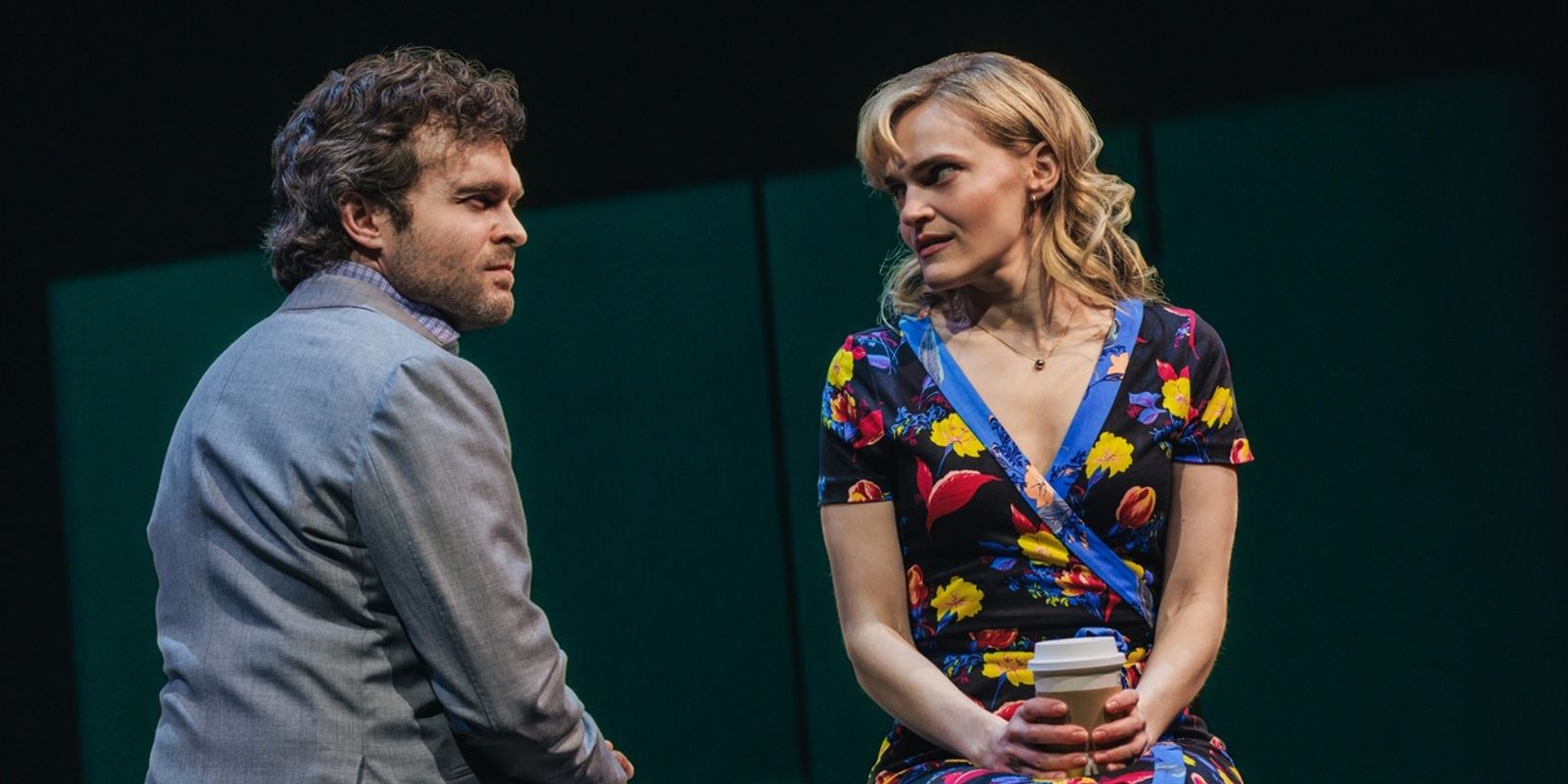
We head across the pond to take a look at what is being said about two-time Pulitzer Prize finalist Gina Gionfriddo’s dark comedy.

Exeunt NYC: “There’s a sense of entitlement that pervades the play–even Becky, whose emotional neediness engenders a sense of entitlement to Andrew’s time and support, though her self-awareness level is a bit higher–has come to dominate American culture. I admire Becky Shaw’s excoriating cleverness and its unflinching look into its characters’ worst behaviors. But in a world with vicious narcissists at the helm, it’s not entirely appealing to be asked to find them funny.”
The New York Times: “With Trip Cullman’s Second Stage Theater production at the Helen Hayes Theater, where it opened on Monday night, I mean that as a compliment. Besides which, the play’s male characters are also magnificently flawed. We don’t require a rooting interest in them as individuals to be caught up in the story. The cast is terrific. The show moves fast. The many laugh lines land.”
The Guardian: *** “The real horror in Becky Shaw is not a bad date but inescapable patterns of dysfunction – just as funny, in moments, but also much, much scarier.”
Time Out: ***** “Cullman’s revival, which marks Becky Shaw’s Broadway debut, serves its plot very well. The production moves fast—even the set changes (to David Zinn’s fine set) have humor and purpose, and Kaye Voyce’s costume design is perfection—and all five actors are first-class, including the scene-stealing Linda Emond as Susie’s acidic mother, Susan, who is prone to Lucille Bluth–esque judgments from on high.”
Vulture.com: “While Becky is the catalyst for the play’s chain reaction — and Brewer nimbly inhabits the charged space between exploited and exploiter — it’s the seemingly impenetrable Max who is at last cracked open. Ehrenreich is superb in the role, as unafraid to be horrid as he eventually is to be broken. In a quintet of fine performances, his stands out in this moment so removed from when Becky Shaw debuted (2008 was not bursting at the seams with essays on our crisis of masculinity). “You are a rich man who puts his family in a two-star hotel,” Susan snaps at Max. “That’s what you are.” That may be part of what he is, but Ehrenreich makes clear that the miserable truth of Max is that he’s not really a man at all. He’s a boy who’s been taught that power will save him.”
Theatrely.com: “Becky Shaw is a work of surprises. In a season of remarkably strong plays, many of which lead one, often expertly, to predetermined conclusions, this is one that presents itself with zero pretensions. In that relaxed calm, further smoothed by its laugh-a-minute comic instincts, questions may arise: What kind of partner am I? Who do I attract? Who do my friends attract? How do they treat their partners? Do I want that? Was that inherited? Gionfriddo offers no easy answers, despite how smoothly her invisible hand makes it all go down. Like your favorite frenemy, it begs for continued, spiky examination.”
New York Stage Review: **** “Cullman’s razor-sharp staging keeps the play, which is arguably overlong at nearly two-and-a-half hours, moving in propulsive fashion, with even the scene changes proving giddily entertaining.”
Entertainment Weekly: “When the laughter fades and you’ve wiped your hands of these utterly unlikable characters, all the upsetting questions they pondered remain. Becky Shaw touches something tender and doesn’t stop there. Like its namesake’s devious smile, it lingers.”
Variety: “As impressive as much of the cast is, Ehrenreich steals the show. What makes Max so arresting is that underneath his bullying and bluster is the wounded heart of a kicked puppy. Like Becky, he wants to be loved. He just has a toxic way of asking for it.”
Deadline: “As good as Cullman’s direction here is, it’s matched beat by beat by a no-weak-link cast. Ehrenreich plays against his usual good-guy screen image to present a corrosive personality that scorches even those he loves (they’re few and far between, maybe even unique, but still). His Max would be right at home in those old Whit Stillman films about toxic Ivy Leaguers. The fact that we ultimately have any sympathy at all for Max – and strangely enough, we do – can be chalked up to a performance that matches the exquisite writing.”
The New York Post: :”Gionfriddo’s play clearly covers a lot of risky ground — gender, race, politics, money — only it’s so relentlessly hysterical you barely notice the mark it leaves until the appetizers arrive. Adding to the entertainment, director Trip Cullman’s direction is sexy, light and swift. “
New York Theatre Guide: “There’s a curious feeling that the production, directed by Trip Cullman, spends much of its run time sneering at its characters as it attempts to land every joke (and the show is very funny), which has the unfortunate effect of making this quasi-farce full of caricatures and not people.”
To find out more about the production visit: https://2st.com/shows/becky-shaw