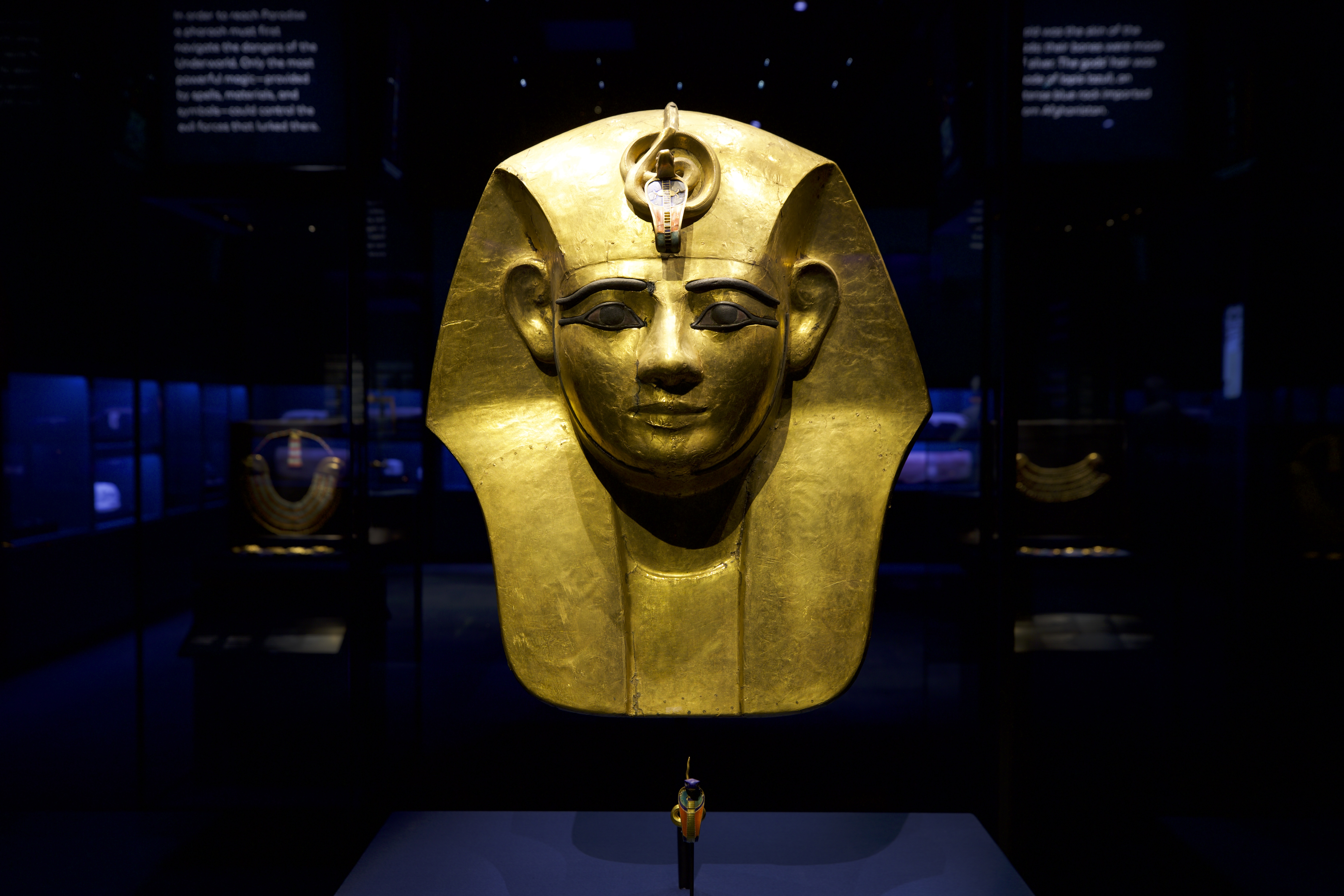
The exhibition features 180 priceless artefacts and opulent treasures from the reign of Ramses and ancient Egypt.

Created in partnership with Egypt’s Supreme Council of Antiques and the Egyptian Museum, NEON’s Ramses and The Pharaohs’ Gold is currently on display at Battersea Power Station.
Featuring 180 priceless artefacts and opulent treasures from the reign of Ramses and ancient Egypt including ornately carved sarcophagi, animal mummies, magnificent jewellery, stunning royal masks, many of the objects on display have never been seen outside of Egypt before.
Those visiting the exhibition will also encounter the original wooden coffin that once held Ramses II’s mummy as one of the exhibition highlights.
In addition, the exhibition also features an immersive virtual reality experience, transporting visitors deep into Ramses’ legacy from the resplendent Tomb of Queen Nefertari to the monumental temples of Abu Simbel.
Having been on display in Paris, San Francisco, Sydney, and Tokyo, the exhibition offers the opportunity to step back in time to the world of King Ramses II, widely known as Ramses the Great.
Part of the 19th dynasty, Ramses II ruled Egypt for nearly 67 years and is celebrated as the mighty warrior-king who helped define the height of Ancient Egyptian civilisation. Known for his extensive monument-building, military strategy and diplomacy, and a vast dynasty of more than 100 children, Ramses remains one of history’s most iconic pharaohs.
Dr. Mohamed Ismail, Minister of Antiquities of Egypt, said: “Ramses the Great was a remarkable pharaoh who helped shape the legacy of Egypt. Many of these treasured artefacts have never travelled outside the country before, and London is about to witness something extraordinary. This exhibition provides a rare opportunity for people to come face to face with the world of Ramses in all its glory before they are returned to Egypt and placed at the newly opened Grand Egyptian Museum. It is my hope that by discovering the story of Ramses, audiences will be inspired to explore Ancient Egypt further and to deepen their appreciation for its enduring cultural importance.”
To book tickets visit: https://ramsestheexhibition.co.uk/london/