The exhibition will run at the Royal Academy of Arts from the 25th July until the 25th October.

The Royal Academy of Arts has unveiled details of its upcoming Richard Dadd: Beyond Bedlam exhibition, on display from July.
This new show will he first major retrospective devoted to Dadd in over fifty years, bringing together around 100 oil paintings, watercolours and drawings. Organised according to the key phases of the artist’s life, it will explore his early years in London as a student at the Royal Academy Schools, his travels, and the final 42 years of his life as a patient in Bethlem and Broadmoor Hospitals.
Best known for his fairy scenes drawn from Shakespearean subjects, Dadd’s works are best known for his extraordinary intricacy and imaginative intensity. He was invited in 1842 on an ambitious tour across the Eastern Mediterranean that would shape the course of his life and work. While it proved to be a profound influence on his artistic imagination, the artist began to have delusions during the long journey that would impact further on his life.
The exhibition will begin with Dadd’s time as a student at the Royal Academy Schools in the late 1830s and early 1840s. Dadd made his name by exhibiting the extraordinary fairy painting Titania Sleeping (Musée du Louvre, Paris) at the Royal Academy’s Summer Exhibition in 1841, marking a breakthrough moment when he was recognised for his distinctive style. This display will be followed by a gallery focused on Dadd’s tour around the Eastern Mediterranean. This space will include pages from his surviving sketchbook and a selection of watercolours, which capture the people, architecture and landscapes he encountered with exceptional observational detail.
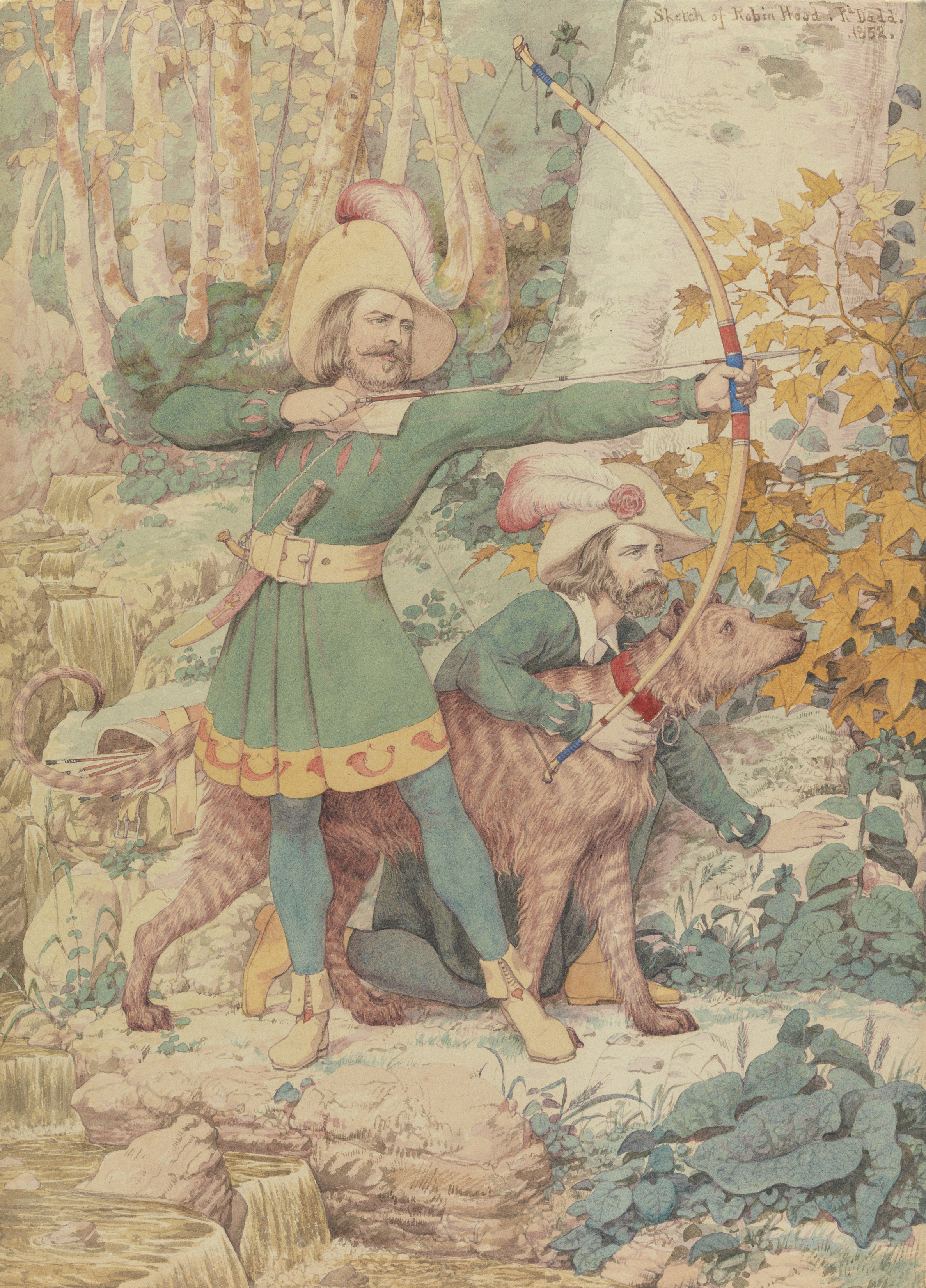
Meanwhile, the following galleries will focus on the body of work Dadd produced at Bethlem and Broadmoor Hospitals. At Bethlem, he returned to the Shakespearean fairy subjects of his youth, and produced some of his most celebrated works, including Contradiction. Oberon and Titania, 1854-58 (Private Collection) and The Fairy Feller’s Master-Stroke, 1855-64 (Tate). Other works created during this period were influenced by literature, legends and memories, ranging from meticulously remembered landscapes to entirely imagined scenes. He also painted portraits of hospital staff who became important supporters and patrons, as seen in works such as Portrait of a Young Man, 1853 (Tate), and contributed to hospital life by making designs for the Broadmoor theatre and prize certificates for staff.
To book tickets visit: https://www.royalacademy.org.uk/exhibition/richard-dadd