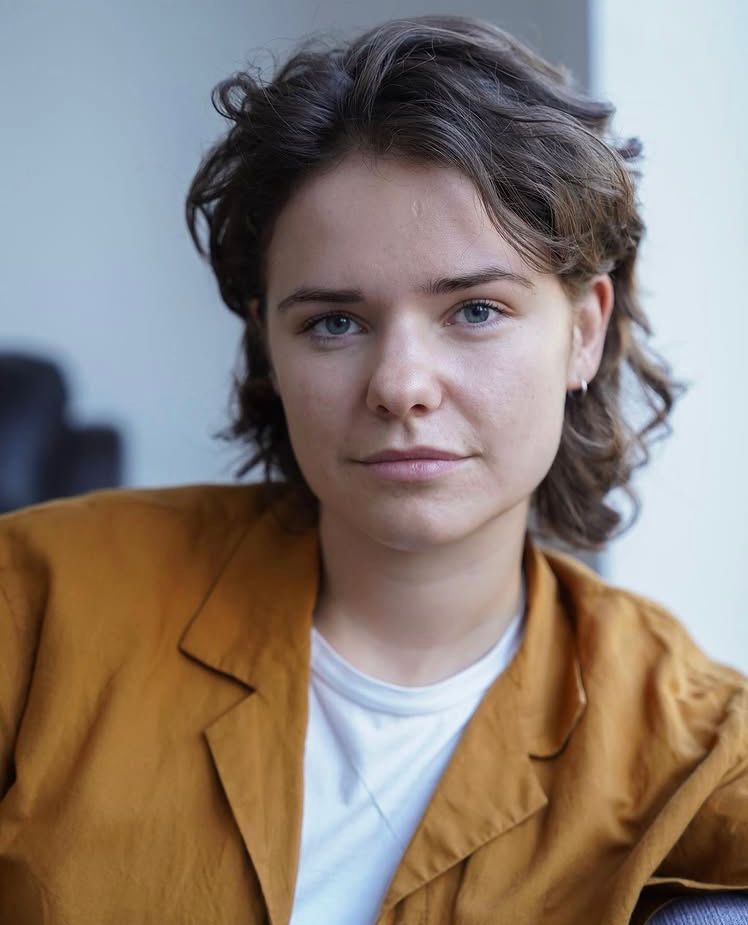
We chatted to Annie about directing ‘Foal’ at the Finborough Theatre until the 30th May.

How does it feel to be directing ‘Foal’ at the Finborough Theatre?
It feels very exciting because it’s been made by a team of high-rate artists with not much
time or resources, yet the standard of the work they’ve created is staggering. Foal is a one-
man show centred around a character called AK whose life has led up to a big event. He
morphs into other characters, memories and mini scenes over the course of the show,
learning about right and wrong, seeing the ways of the world and where he fits in it. Pierre
Flasse’s beautiful composition and creation of our sound world underscores the entire play,
Rajiv Pattani’s lighting has bold gestures towards locating us or taking us right into AK’s
psyche and Cara Evans’ set design situates us in almost a liminal space that we could play
and invent worlds in, setting up the form of our storytelling.
What attracted you to being part of bringing Titas Halder’s play to life?
The opportunity for creativity in its form and visual language. It’s an 80-minute one-man
show and yet it includes dialogue, prose and verse, big images, important settings and it
taps into ideas much bigger than ourselves. I was drawn in by its might and the intricacy of
Titas’ writing. Reading it for the first time set off lots of exciting ideas for me.
How have you found the experience of bringing this story to life?
Very fulfilling. A lot of that is due to the brilliance of our team, headed up by our leading man Amar Chadha-Patel. I kept calling him an athlete actor because in many ways he is, you can throw everything at him, and he’ll take it all in his stride and still get a PB. He’s also got the intelligence and instincts that make him a great collaborator. He makes detailed, clever
decisions in his performances that help us get to the root of what’s underneath the scene.
We found a great flow working together, trusting each other to try things out even if they
were more a bit outlandish, which we needed to do to identify the language of a non-
naturalistic, oftentimes symbolic, sometimes surreal piece of theatre.
What did you take away from the play when you first read it?
I don’t want to give away too much. But here was my main takeaway: A lot of people in our
world today are doing a balancing act of trying to get by, trying to have a nice life and trying
to do good. But what they’re up against is a world that is making that more difficult as the
media fuels division and emboldens extreme and harmful views. Many feel powerless with
what’s going on around us. What do we do about that?
What do you enjoy the most about being part of the theatre industry?
I love the strive to make good artistic work. I especially enjoy when I’m wrong about what
makes good theatre, because it means creativity is being pushed and expectations are being
exceeded. In a directing context, it means someone has run with the storytelling language
that I’ve been trying to set up but then they’ve challenged it and made it better in a way I
thought was not possible – I had a few moments like that whilst directing this play. In a
watching theatre context, it means that I think I know my taste and what doesn’t work
onstage. However, being proven wrong about that and seeing something surprising onstage
that I thought wouldn’t work is completely exhilarating.
To find out more about ‘Foal’ visit: https://www.finboroughtheatre.co.uk/productions/foal