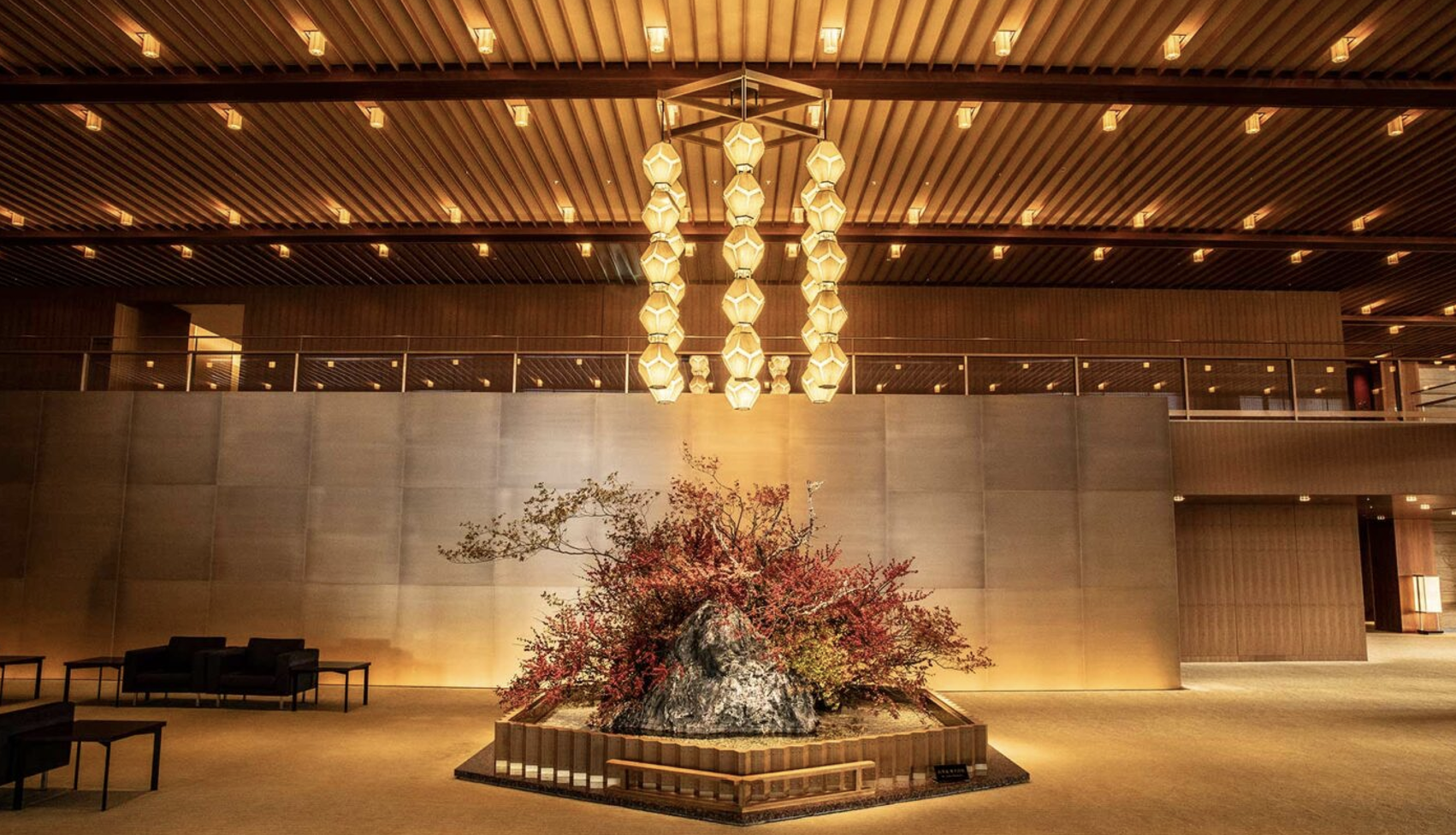
The hotel is based in the centre of the city and combines a rich heritage with contemporary elegance.

Established in 1962 and known for its Japanese modernist design, The Okura Tokyo has recently undergone transformation. This redesign honours the hotel’s architectural legacy – preserving its elegant, minimalist lines and traditional craftsmanship – while elevating guest comfort with modern luxury and technology.
Featuring more rooms, the hotel is comprised of two distinct wings, the Okura Prestige Tower (368 rooms) and the Okura Heritage Wing (140 rooms), the former, standing at 41 stories, boasts state-of-the-art banquet and convention facilities and panoramic city views from the 28th floor onward. The latter, a 17-story structure, preserves authentic elements inherited from the former Hotel Okura, such as the iconic Wisteria Chandelier and the Thirty-six Immortals of Poetry wall mural, while facing the Okura Garden and embodying serene Japanese beauty and elegance.
The hotel is situated in Minato-ku and is surrounded by y serene gardens and landmarks such as the National Art Centre, Roppongi, and historic Akasaka.
In addition, the hotel offers five restaurants, including an all-day dining venue, serving Japanese, French, teppanyaki, and Chinese cuisine. At Yamazato, the hotel’s renowned Japanese restaurant, newly appointed Grand Chef Akihiro Omori continues a globally admired legacy of haute Japanese dining.
For culture, guests can access rivate Noh theatre performances, artisan-led craft workshops, and tailored cultural experiences. Personal cultural concierges connect guests to rare and authentic experiences across Tokyo, making each stay deeply enriching.
Meanwhile, the Okura Lobby Symbolic Design Tour highlights the architectural legacy of Mr. Taniguchi, continued across two generations, and offers guests the opportunity to experience his iconic design through guided visits. Guests can also enjoy the serenity of a traditional Tea Ceremony at Chosho-an, or relax at Okura Fitness & Spa, which offers panoramic views and features one of Japan’s largest indoor pools, measuring 25m with five lanes.
The hotel includes the Okura Museum of Art, established by himself in 1917 to preserve Japanese artworks and promote cultural development. Kihachiro’s extensive collection was donated with land and funds to safeguard Japan’s artistic heritage. The 13,000-square-meter Okura Garden offers a public oasis in the Toranomon district.
To find out more visit: https://theokuratokyo.jp/en/