We take a look at what is being said about this new adaptation of Andrew Lloyd Webber’s classic musical.
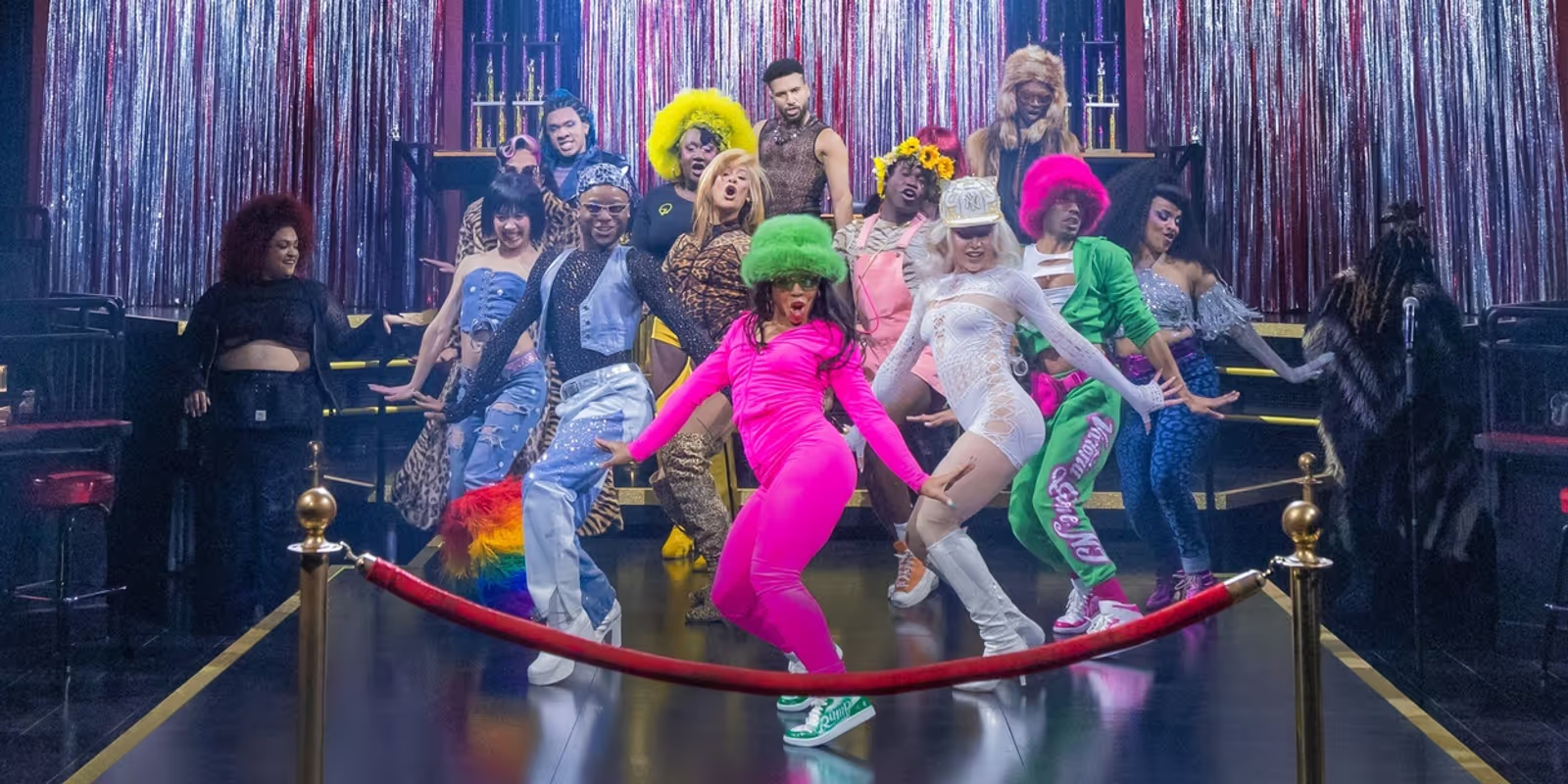
New York Stage Review: ***** “If we’re handing out trophies, as one does in ballroom, let’s be sure to save one for Nikiya Mathis, whose gravity-defying hair and wig design is both fabulous (see: Skimbleshanks’ tabby-striped wig) and functional, holding up during the fiercest choreography. “
WhatsOnStage: “Most wonderfully, Cats: The Jellicle Ball exudes deep reverence for ballroom and the pioneers who built it. The second act opens with a heartfelt tribute to “the founding mothers” who faced social and legal consequences for their art (tasteful projections by Brittany Bland). Genuine ballroom veteran Junior LaBeija plays Gus the “theatre cat,” and seems to be having a ball overseeing the show from a house right box. When he finally comes down to the stage, the young kitties gather round to listen.”
Time Out: ***** “What’s most impressive about this production, however, is how well the concept complements the musical. Levingston and Rauch’s vision fits Cats like a long sequined glove. No chance is missed to tease out potential queer meanings—when the cats sing “Jellicle cats come out tonight,” some of them carry signs that say “COME OUT”—and at times, the matches are almost eerily perfect: in the show’s sense of a hidden community, for example, or in its emphasis on respecting the names the cats have chosen for themselves.”
The Guardian: **** “Because this is still Cats, there is a corniness to the piece that sometimes dilutes the show’s revolutionary verve. A bassline is added to a few songs to make them better fit their new milieu, but much of the time we are served straightforward versions of Webber’s stickily sonorous compositions. I might have liked a little more innovation there, within whatever constraints the Webber camp has agreed upon. For the most part, though, this equally beloved and maligned 1980s curio (dreadfully immortalized on film) feels utterly reborn.”
The New York Times: “In the revisioning (the text itself is largely unchanged), Lloyd Webber’s “cats” aren’t literally cats anymore. The “curious cat” Rum Tum Tugger (the scene-stealer Sydney James Harcourt) is an abs-baring pretty-boy contestant. Magical Mister Mistoffelees (the balletic Robert “Silk” Mason) executes a few sleight-of-hand tricks in the middle of their enchanting pirouettes. Everyone flirts; everyone goes hard; everyone shines.”
Deadline: “What wasn’t preordained is just how beautifully executed the entire venture turns out to be. You’d have to be a real stickler for tradition to begrudge Jellicle Ball its innovations, and one suspects even the stickliest will find joy in the tunes and story that remain in this show’s DNA. It’s all still here, fueling yet another life, familiar as an old tabby yet fresh as a kitten.”
Variety: “Because the show’s text is largely limited to Eliot’s 1939 volume of light verse, it remains essentially a long revue overlaid with thin narratives. This new queer concept could easily wear out its initial welcome — as its previous concept did for many in 1984. But here it’s rooted in a real — rather than feline — community and its humanness is essential.”
Theatrely.com: “Lastly, of course there is Grizabella, the original “Glamour cat.” The sheer presence that Chasity Moore brings to this role elevates Jellicle Ball to devastating emotional heights. Moore’s rendition of “Memory” is ragged, and weary. It carries a weighty history, and years of pain. It is precisely all that history, deeply felt in this momentous staging, that makes both Moore and this production so otherworldly. This Ball is not just a remembrance of things past—it points a way forward, to a more fabulous future.”
New York Theater.me: “Much care has been taken in the grafting of the queer onto the weird. There is an official ballroom consultant and also a gender consultant. Both the cast and the creative team feature participants in ballroom competitions. The music is arranged to sound like house music. And, perhaps most central to the transformation, choreographers Arturo Lyons and Omari Wiles inject this dance-heavy show with ballroom’s exciting movement vocabulary – hand performances, catwalks (!), duck walks, spins and dips “
To find out more visit: https://catsthejellicleball.com/