Mekhai Lee‘s beautifully constructed short film examines family, grief and finding the strength to follow your dreams.
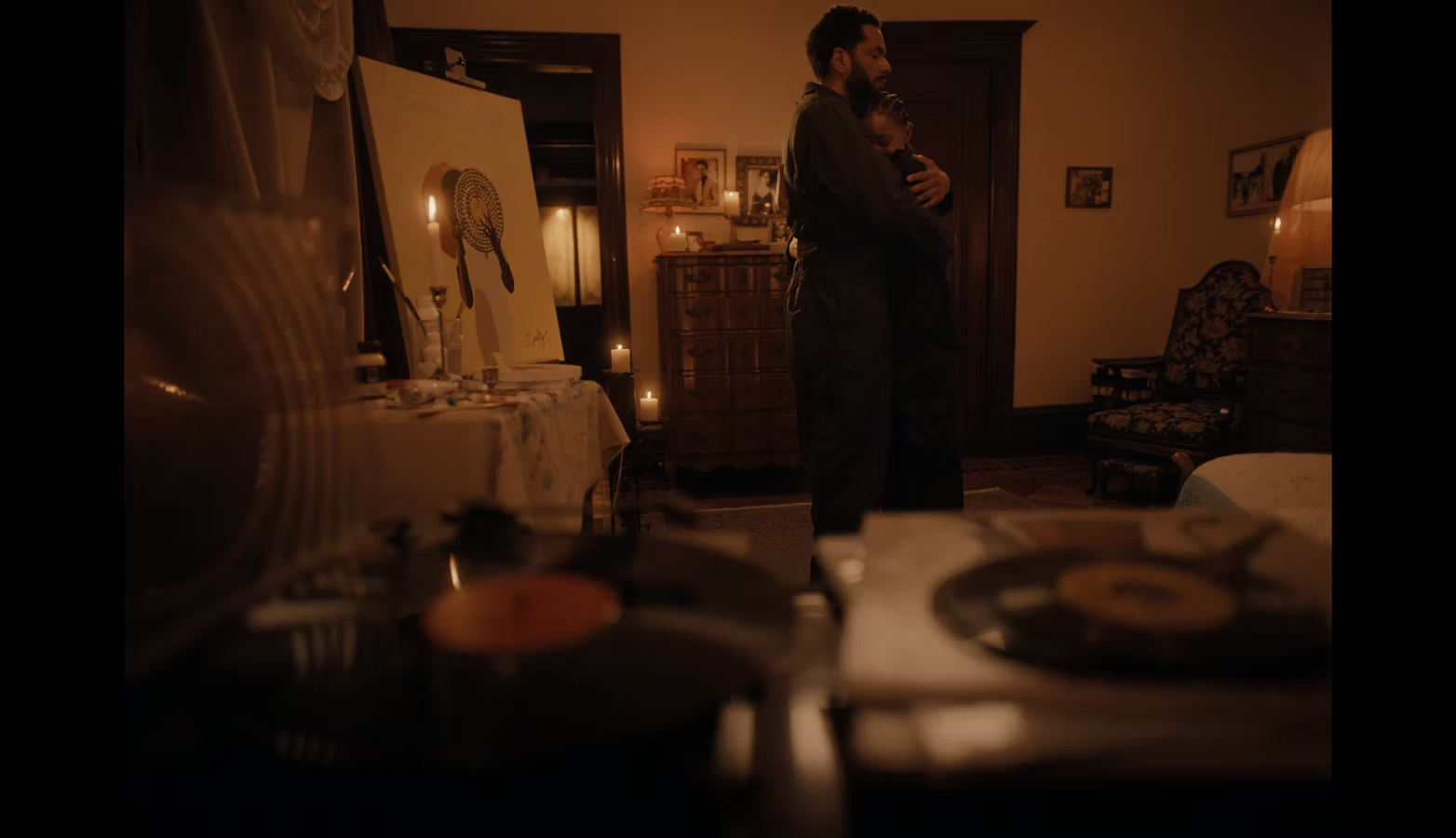
There is a quiet thoughtfulness and compassion in the way that Mekhai Lee’s Them That’s Not unfolds that manages to keep the audience emotionally invested in the outcome to Andrea “Drea” Stoney’s story.
The film centres around Drea, a deaf poet, who is completely isolated by her family whilst in attendance at her beloved grandmother’s repass. Her family neglect to use ASL to make her feel included, leaving her to seek out quiet spaces to think and reflect as to what is next for her. But this is shaken up with the arrival of her estranged father Samuel who wants to repair the damage done to their relationship.
Through his writing, Mekhai Lee offers emotional depth whilst the direction of the film itself means that the audience feel as though they are experiencing the story from Drea’s perspective. The tight shots focusing on the character as well as the emphasis on the ASL that Samuel employs contrast nicely with the wider shots of Drea’s family only using ASL in a limited way highlighting just how isolated Drea is from the rest of her family.
But, there is also great power in the way in which sound is turned on and off delving the audience even further into Drea’s world, capturing the difficulty that she experiences on a day to day basis. Meanwhile, the use of subtitles that are muffled again highlight how Drea is trying to read lips – with her saying on occasion to people around her to slow down.
While there is of course sympathy for Drea, the film also highlights the callousness of her family in not recognising her struggles which can be slightly painful to watch, makin the end scenes with her father even more powerful. Every scene feels really authentic.
Yes perhaps the film feels isolating, with Sade Ndya’s cinematography using such a creative use of shots to enhance this, but it ensures that the focus is continuously on Drea and her experiences.
Angel Theory’s performance as Drea is deeply nuanced and captivating to watch as her conflicting emotions emerge during every interaction she has with various members of her family. Meanwhile, Biko Eisen-Martin as Drea’s father finds great depth in the character trying to make peace with the past and to provide drea with comfort and encouragement in pursuing her dreams. It really is a lovely ending to the film.
Elsewhere, Carrie Compere’s performance as Aunt Carol has a complexity to it as she tries to understand Drea and her ambitions. She showcases the character’s wanting to support Drea but equally wants her to do something more practical with her life other than poetry – it is brutal to see the way in which she dismisses Drea’s passion but Compere captures this without making the moment seem overblown.
Everything about Mekhai Lee’s film is well grounded and feels natural. It is perhaps a little bit sombre and painful to see how Drea is treated by the majority of her family – but it ends on an uplifting note to showcase that it all it needs is one person to help encourage you to follow your dreams. It is a lovely film from start to finish.
Rating: ❤️❤️❤️❤️❤️